
Colivă for a memorial: what it's made of, when it's served and how it's shared
What colivă means, which memorials it's made for, how it's taken to church and how it's shared after the service.
Colivă is never missing from a memorial: not from the funeral, not from the forty-day memorial, not from Moși. It's also the thing families ask about least, because it seems obvious — until it has to be made. Below is what is customary around Iași. Anything to do with the service is for the priest to say.
Colivă and colaci, prepared by us
Real photos, from recent memorial meals.
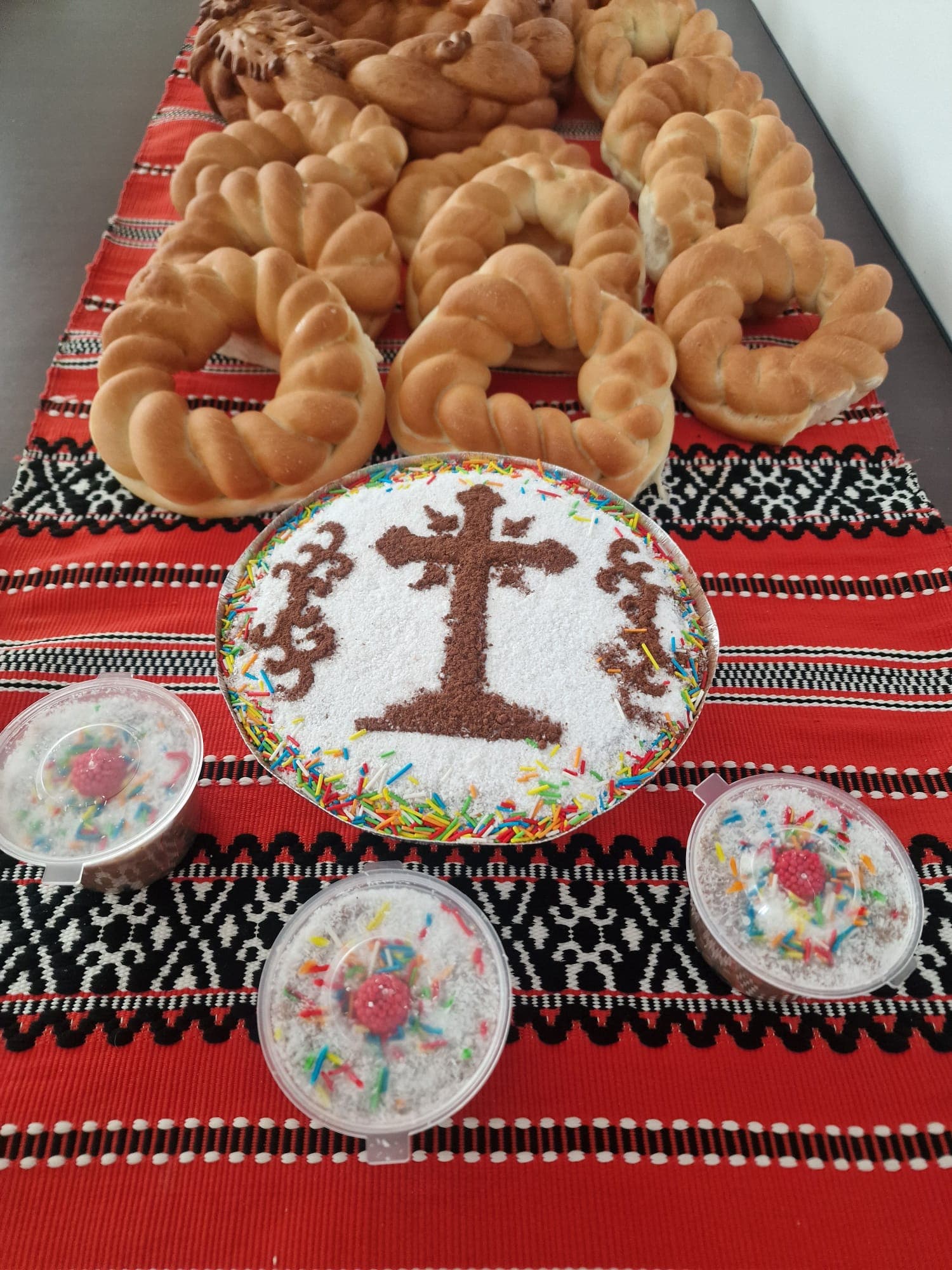
Colivă, ready for the table 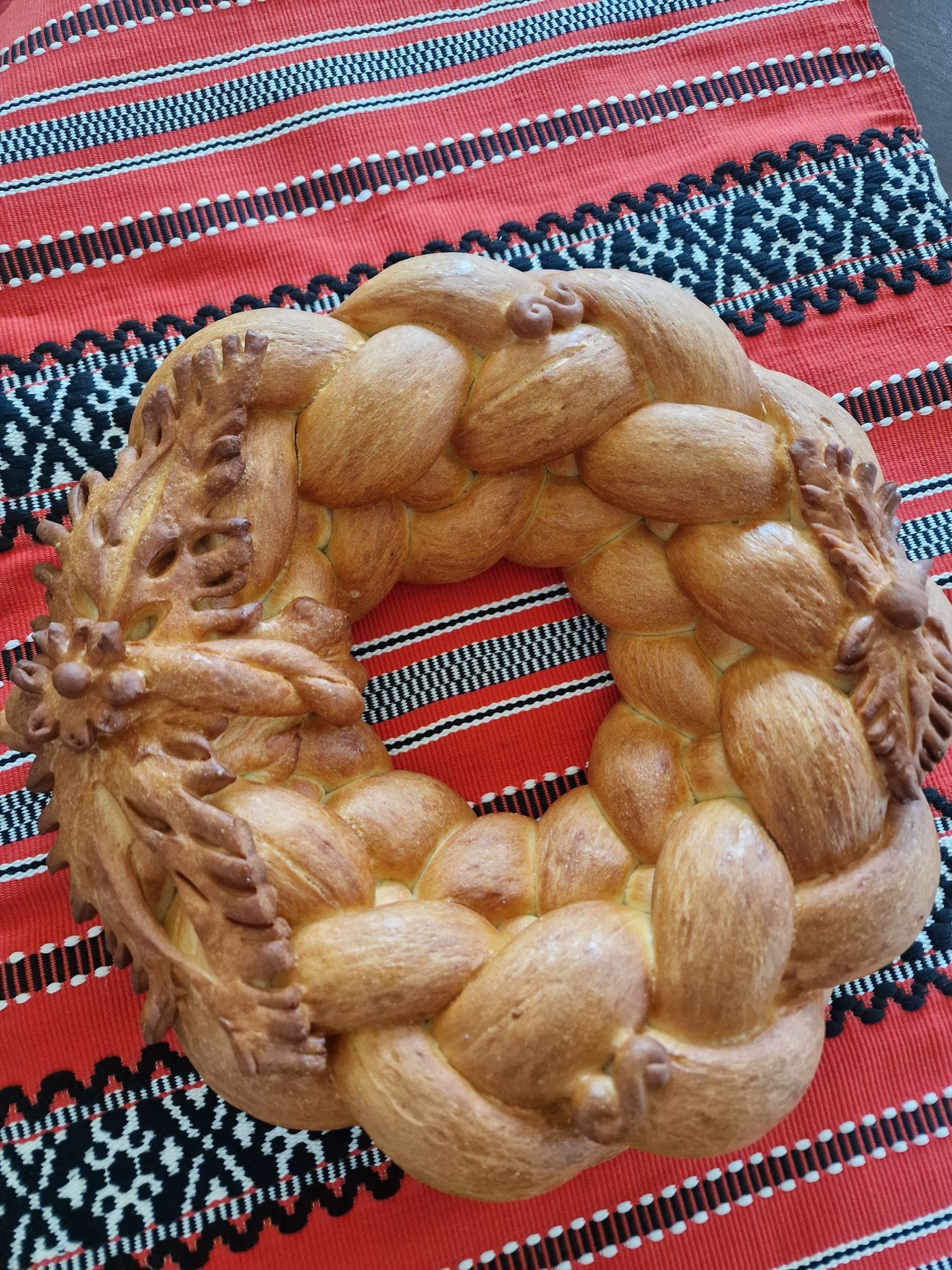
Colac, braided and baked to order 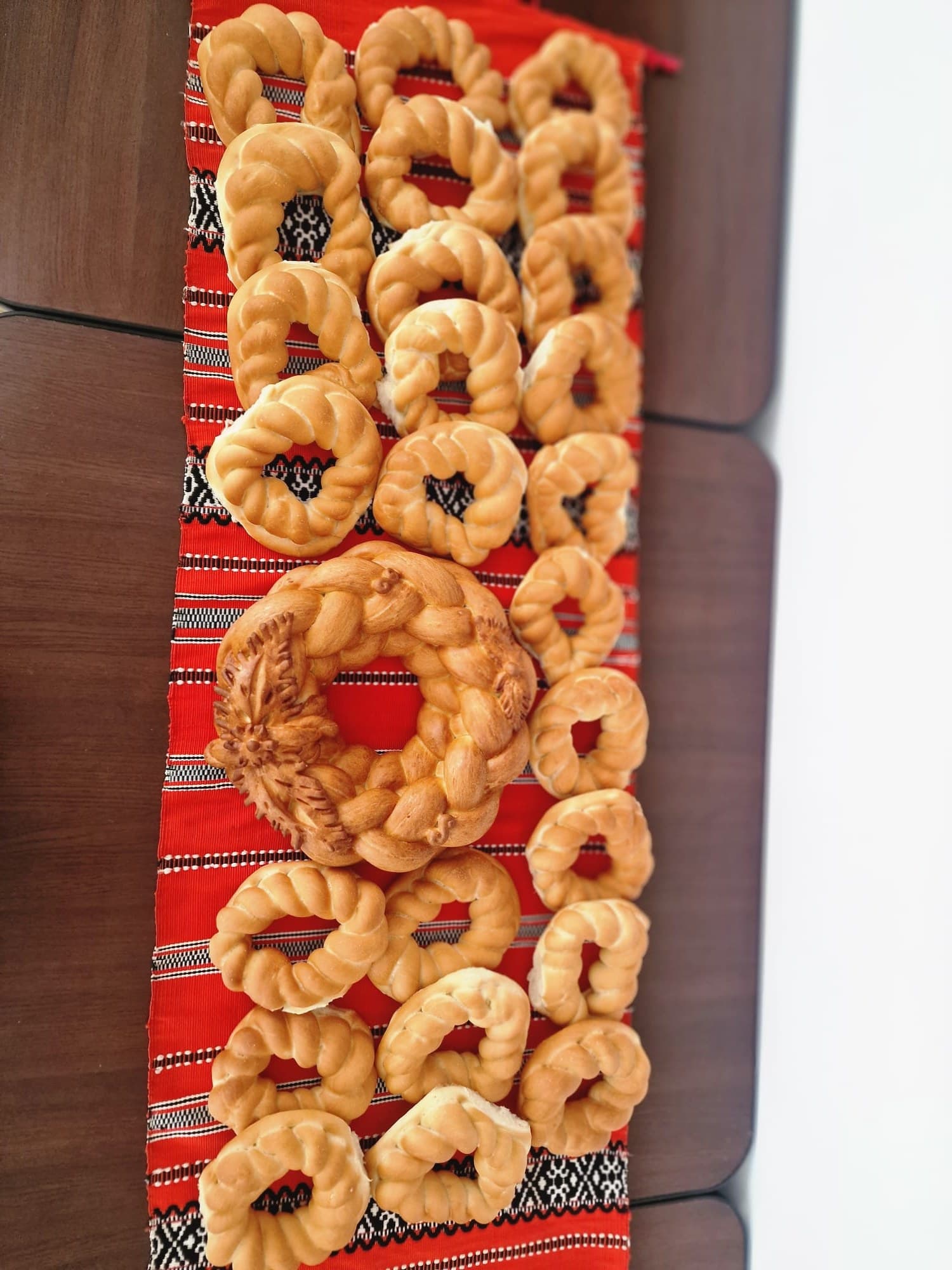
Colaci for a memorial meal
What colivă is and what it means
Colivă is boiled wheat, sweetened and mixed with walnuts. Wheat is chosen on purpose: the grain put into the ground dies in order to bear fruit, and in Christian tradition it is the sign of resurrection. That's why colivă belongs to the remembrance of the dead and not to other meals.
It is blessed at the memorial service with a lit candle in the middle, and after the service it is shared among those present. Everyone takes a little and says “May God forgive him” (or her).
Which memorials colivă is made for
At the funeral and then at every memorial date: at three days, nine days, forty days, six months, one year and every year up to seven. It is also made for the collective memorials — the summer, autumn and winter Moși — and on the Saturdays of the dead in Great Lent.
It is never left out, however small the meal and whether the day is a fasting day or not.
What it's made of
Our colivă is made from boiled wheat, sugar and walnuts. It has no milk and no eggs, so it is lenten and fits any memorial table. A good colivă keeps the grains whole rather than mushy, and leaves no liquid on the plate.
The top is smoothed and decorated. The photo above shows one of ours, with a cross of breadcrumbs and icing sugar. In many homes sweets or the initials of the person remembered are added as well.
How it's taken to church and shared
Colivă is taken to church on the day of the service, on a platter or in a wide dish, with the candle set in the middle and the colaci beside it. After the service part of it is shared there, and the rest goes to the memorial meal, where it's served at the end together with the colaci and dessert.
It can also be made in individual cups, as in the photo: they're easier to hand out after the service, and anyone who isn't staying for the meal can take one home.
Capete: colivă on the Lenten Saturdays
In Moldavia, on the Saturdays of the dead in Great Lent, families bring “capete” to church: baskets with colivă, colaci, fruit and some cooked food, for those being remembered. The custom is called purtarea capetelor. They are blessed at the service and then shared among those present.
Since it's Lent, everything in the basket is lenten — the colivă already is. Families who want an easier Saturday order the colivă and colaci in advance and prepare the rest of the basket at home.
How much colivă to make
It's counted by the number of people coming to the service and the meal: everyone should get at least a spoonful, and some stays at church. There's no need to work it out in kilograms — tell us how many people you expect and we prepare the right amount.
Colivă from us
Colivă and colaci are part of the memorial menu, from 45 lei per person for delivered catering, with delivery included within the city of Iași. Order at least 10 days ahead, as for any meal we organise.
For Moși and the Saturdays of the dead, when many orders come in at once, it's best to call earlier: on those days we cook for several families at the same time.
Frequently asked
What families ask us
Is colivă lenten?
Yes. It's made from wheat, sugar and walnuts, with no milk and no eggs, so it goes on any memorial table, fasting or not.
When is colivă eaten at a memorial?
After the service it's shared among those at church, and at the memorial meal it's served at the end, together with the colaci and dessert.
Which memorial dates is colivă made for?
At the funeral, at 3, 9 and 40 days, at 6 months, at one year and every year up to seven. Plus at Moși and on the Saturdays of the dead.
What goes on top of colivă?
It's smoothed and dusted with icing sugar, with a cross on top — made of breadcrumbs, cocoa or sweets. At the service a candle is placed in the middle.
What are “capete” for a memorial?
The baskets of colivă, colaci, fruit and lenten food that families in Moldavia take to church on the Saturdays of the dead in Great Lent. They're blessed at the service and shared among those present.
What happens to leftover colivă?
It isn't thrown away. It's given to neighbours and to those who couldn't come, or eaten within the family — what's left is still an offering.
Can I order colivă in Iași?
Yes. Colivă and colaci are part of our memorial menu, with delivery included within the city of Iași. Let us know at least 10 days ahead.
Read next